
High Precision Components Manufacturer in 2026: Processes, Tolerances, Materials & Choosing the Right Partner
What Is a High Precision Components Manufacturer?
A high precision components manufacturer is a specialized engineering partner dedicated to producing parts with extremely tight dimensional tolerances and exceptional surface finishes. Unlike standard components suppliers, precision manufacturers operate at the very limits of what is physically achievable, often working with tolerances measured in micrometers (microns).
The core function of these manufacturers is to serve industries where the failure of a single component can have catastrophic consequences, such as in aerospace, medical devices, and semiconductor equipment. Achieving this level of accuracy requires advanced machinery, meticulous quality control, and expert knowledge in precision machining.
Why High Precision Components Matter in Modern Manufacturing?
The shift toward smaller, more powerful, and more reliable systems (from advanced robotics to miniaturized medical implants) has made high precision components manufacturing indispensable.
High precision parts are critical because they ensure:
- Optimal Performance: Tight tolerances minimize friction, heat generation, and wear, ensuring machinery runs at peak efficiency.
- Reliability & Safety: In sectors like aerospace and defense, component failure due to dimensional inaccuracies is simply not an option.
- Interchangeability: Components manufactured with repeatability manufacturing standards can be swapped out globally without fitment issues, simplifying maintenance and assembly.
- Miniaturization: The demand for micro fabrication requires component features to be accurate to micron levels for electronic and sensor technologies.
What Tolerance Is Considered High Precision in Manufacturing?
Tolerance is the allowed variation in a dimension. While a standard component might have a tolerance of ±0.1 mm (100 microns), true high precision components manufacturers routinely work with tolerances below that threshold.
- Standard Precision: ±0.05 mm (50 microns)
- High Precision: ±0.01$ mm to ±0.005 mm (10 to 5 microns)
- Ultra-Precision/Micro-Machining: Tolerances of ±0.001$ mm (1 micron) or less.
When searching for a tight tolerance components manufacturer, you should look for those who can reliably achieve single-digit micron accuracy on complex features. Achieving this requires environmental control (constant temperature) and sophisticated metrology services.
Materials Used in High Precision Components Manufacturing
The choice of material is directly linked to the component's function and the precision machining requirements. High precision manufacturers specialize in materials that are often difficult for standard CNC manufacturing shops to handle.
| Material Type | Typical Application | Key Machining Challenge |
|---|---|---|
| Titanium Alloys | Aerospace structures, orthopedic implants | Low thermal conductivity, high strength-to-weight ratio |
| Inconel & Hastelloy | High-temperature applications (jet engines, turbines) | Extreme hardness, work hardening during cutting |
| High-Nickel Fabrication | Chemical processing, oil & gas seals | High material cost, very difficult to chip |
| Stainless Steels | Surgical instruments, fluidic systems | Maintaining surface finish and dimensional stability |
| Specialty Plastics | PEEK, Ultem for medical and electrical insulation | Managing heat deformation and internal stresses |
We are experts in precision titanium machining and machining Inconel components while maintaining strict tight tolerance machining standards.
Manufacturing Processes Used by a High Precision Components Manufacturer
Achieving sub-micron accuracy requires deploying specialized and often interconnected processes that go far beyond conventional milling and turning.
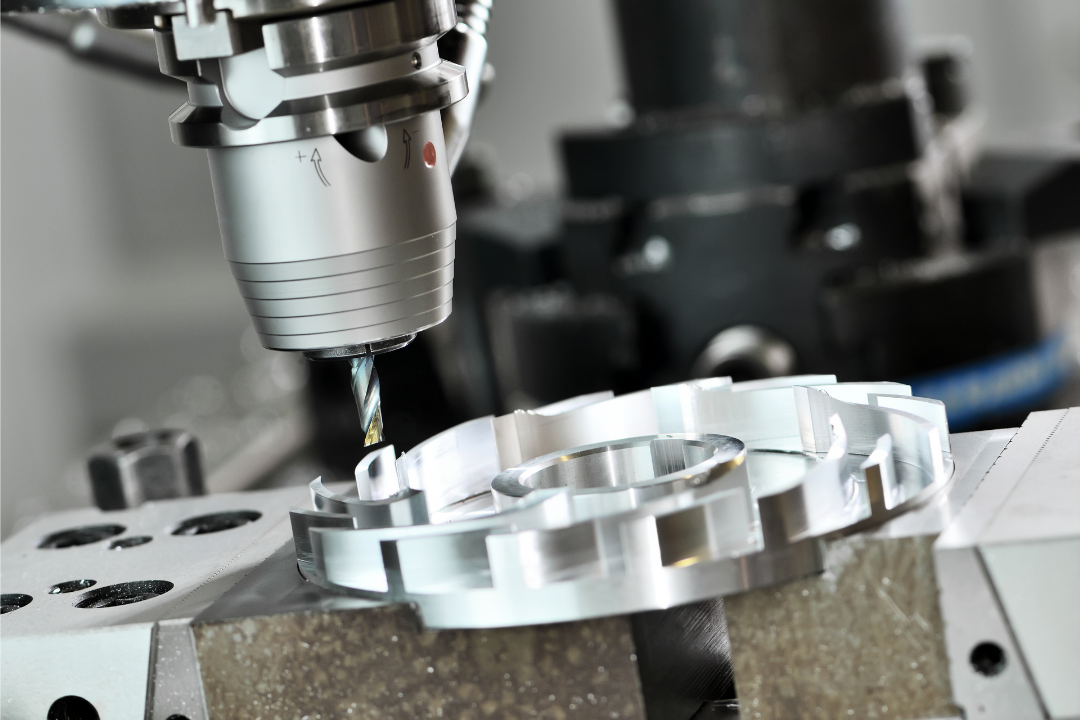
- Precision 5-Axis CNC Machining:The cornerstone of high precision CNC machining. This technology allows us to machine highly complex geometries in a single setup, eliminating errors that arise from re-fixturing the part.
- Precision Turning and Milling:Used for prismatic and rotational parts, often employing simultaneous multi-axis techniques.
- Wire EDM Cutting Services:Essential for creating ultra-fine cuts and complex internal features in hard metals without causing thermal or mechanical distortion.
- Precision Grinding:Required to achieve mirror-like surface finishes and the tightest final tolerances, especially for mating surfaces and bearing interfaces.
- Micro Machining Services:Dedicated equipment used to manufacture parts with features smaller than 1mm, common in sensor technology and medical device high precision parts machining.
How Are High Precision Components Tested for Accuracy?
Inspection is arguably as important as the machining itself. A high precision components manufacturer must verify that the micrometre tolerances have been met using certified, climate-controlled inspection rooms.
- Coordinate Measuring Machines (CMM):The primary tool for metrology services. CMMs use high-accuracy probes to measure the geometry of a part and generate a detailed report, verifying every dimension against the engineering drawing.
- Non-Contact Optical Measurement:Vision systems and laser scanners are used for delicate or highly complex surfaces where a physical probe might cause deflection.
- Surface Roughness Testing:Specialized instruments measure the texture and finish of the surface (Ra, Rz values), which is crucial for friction-sensitive applications.
- Material Testing:Components are often subjected to non-destructive testing (NDT) like ultrasonic testing or dye penetrant inspection to verify material integrity and absence of micro-cracks.
High Precision Components Manufacturer vs. Regular Component Supplier
The difference lies in commitment, capability, and quality culture.
| Feature | Regular Component Supplier | High Precision Components Manufacturer |
|---|---|---|
| Tolerances | Typically ±0.05 mm or more. | Reliably ±0.01 mm (10 microns) and often tighter. |
| Equipment | Standard 3-axis CNC machines; general tooling. | Precision 5-axis machining, climate-controlled rooms, advanced metrology. |
| Quality System | Basic Quality Control (QC). | Certified to AS9100 (Aerospace) or ISO 13485 (Medical). |
| Materials | Common steels, aluminum, plastics. | Exotics like Titanium, Inconel, and other difficult-to-machine alloys. |
| Mindset | Focus on speed and volume. | Focus on repeatability manufacturing and zero-defect rate. |
When your application demands reliability, a high precision components manufacturer is the only safe choice.
Custom High Precision Components Manufacturing – From Design to Delivery
Our process is collaborative, designed to streamline the journey from concept to final product:
- 1. Design for Manufacturing (DFM) Review:We review your prints to ensure the design can be manufactured economically while maintaining tight tolerance machining requirements.
- 2. Material Sourcing & Verification:We source high-grade materials and provide necessary certifications (Mill Test Certificates).
- 3. Advanced Programming:Tool paths are optimized using state-of-the-art CAM software for minimal tool deflection and maximum surface finish.
- 4. Precision Production:Parts are machined in temperature-controlled environments using 5-axis CNC machining services.
- 5. Quality Verification:Every part undergoes strict inspection using CMMs and optical tools.
- 6. Certification & Documentation:Full inspection reports, material traceability, and compliance documentation are provided with every delivery.
We specialize in custom precision manufacturer projects, ensuring seamless integration into your larger assembly.
Challenges in High Precision Manufacturing & How We Solve Them
The path to achieving micrometre tolerances is fraught with challenges, yet a seasoned high precision components manufacturer has built systems to overcome them.
| Challenge | Our Solution |
|---|---|
| Thermal Expansion | We utilize advanced tool-monitoring systems and premium coated tooling to ensure consistency and minimize deflection. |
| Tool Wear | Standard 3-axis CNC machines; general tooling. |
| Material Stress | Strategic heat treatments (stress-relieving) and multi-stage machining processes are used to prevent warping. |
| Vibration | Our machines are placed on specialized dampening foundations to isolate them from external shop vibrations. |
| Scrap Rate | Focus on repeatability manufacturing and first-time quality reduces material waste and delivery delays. |
Lead Time & Scalability in High Precision Components Manufacturing
While precision work takes longer than standard fabrication, efficiency is key.
- Lead Time:Our investment in 5-axis CNC machining and automation allows us to reduce setups and cycle times significantly. We provide transparent lead time projections for low-volume machining (prototypes) and high-volume runs.
Scalability: We are structured to scale quickly. Once a production process is validated for high precision, our robust Quality Management System ensures repeatability across hundreds or thousands of parts. We transition smoothly from small-batch custom precision manufacturer needs to large-scale production.
How to Choose the Right High Precision Components Manufacturer?
When looking for a where to find tight tolerance components supplier, ask these critical questions:
- 1. What Certifications do they hold?(Look for AS9100, ISO 13485 for specialized sectors.)
- 2. What is their lowest achievable, guaranteed tolerance?(Look for single-digit microns.)
- 3. What Metrology equipment do they use?(Ask specifically about CMM brand/model and calibration schedules.)
- 4. Do they provide full material and inspection traceability?(This is non-negotiable for compliance.)
- 5. Do they offer Design for Manufacturing (DFM) support?(This shows partnership, not just execution.)
High Precision Components Manufacturer in India – Why Global Clients Choose Us
Choosing us as your high precision components manufacturer in India offers world-class quality with significant logistical and economic advantages.
We combine:
- Global Standards:We maintain international certifications (ISO 9001/AS9100/ISO 13485) and utilize the same state-of-the-art precision CNC machining equipment found worldwide.
- Expert Talent Pool:India provides access to a highly skilled, specialized engineering workforce focused on quality and technical execution.
- Cost Efficiency:We deliver competitive pricing without sacrificing the required micrometre tolerances or adherence to strict material specifications.
If your project requires high precision aerospace components manufacturer level accuracy or ISO 13485 high precision medical components, we are equipped to be your reliable global partner.
Ready to move forward with your next precision project?
Request a Quote or Consultation with our Engineering Team Today!
FAQs – High Precision Components Manufacturer (2026)
1. What does a high precision components manufacturer do?
A high precision components manufacturer makes parts with extremely tight tolerances using advanced CNC machining, precision turning, milling, and micro machining. These components are used in industries like aerospace, medical devices, automotive, and semiconductor equipment where accuracy is critical.
2. What tolerance is considered high precision in manufacturing?
In manufacturing, high precision usually means tolerances of ±0.01 mm or tighter. Some industries, like aerospace and medical device manufacturing, require micrometre-level tolerances, where even the smallest deviation can affect performance.
3. Which industries need high precision components the most?
Industries that commonly need high precision components include:
- Aerospace and aviation
- Medical devices and surgical equipment
- Automotive and EV manufacturing
- Semiconductor and electronics equipment
- Defence and industrial machinery
These sectors rely on tight tolerance components for safety, reliability, and performance.
4. What materials are used for high precision components?
A high precision components manufacturer works with materials such as:
- Stainless steel and carbon steel
- Aluminium alloys
- Titanium and titanium alloys
- Inconel and high-nickel alloys
- Engineering plastics
The material choice depends on strength, heat resistance, corrosion resistance, and application needs.
5. How are high precision components tested for accuracy?
High precision components are tested using advanced metrology services like:
- Coordinate Measuring Machines (CMM)
- Optical and laser measurement systems
- Surface roughness testers
- Gauge blocks and calibration tools
These tests ensure repeatability, dimensional accuracy, and compliance with quality standards.
6. What is the difference between a high precision manufacturer and a regular supplier?
A regular component supplier focuses on standard parts with wider tolerances.
A high precision components manufacturer specialises in tight tolerance machining, custom designs, advanced CNC manufacturing, and strict quality control for critical applications.
7. Can high precision components be custom-made?
Yes. A custom precision manufacturer supports the full process — from design review and prototyping to CNC machining of custom titanium components and final inspection. Custom manufacturing is common for aerospace precision components and medical device parts.
Why choose a high precision components manufacturer in India?
Global clients choose a high precision components manufacturer in India for:
- Skilled CNC machining expertise
- Advanced 5-axis machining capabilities
- International quality standards (ISO, medical & aerospace compliance)
- Competitive cost without compromising accuracy
India has become a trusted hub for precision parts suppliers worldwide.
What certifications should a high precision components manufacturer have?
- A reliable manufacturer should follow quality systems such as:
- ISO 9001 for general manufacturing
- ISO 13485 for medical device high precision components
- Industry-specific quality and inspection processes
Certifications ensure consistency, traceability, and reliability.